



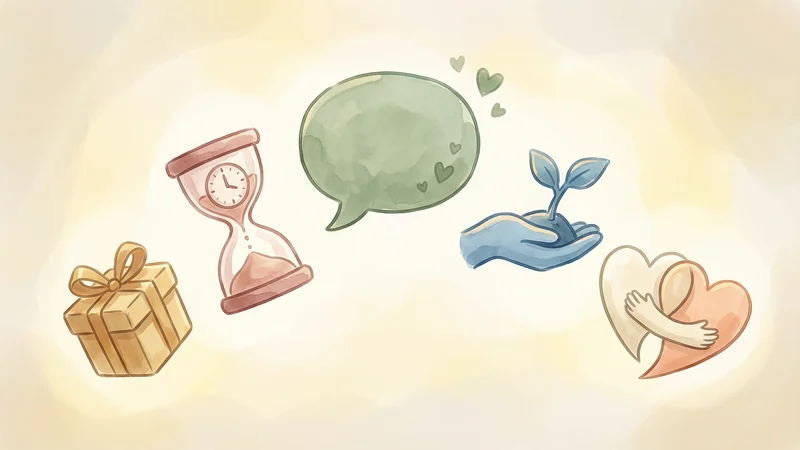
Picture this: every day you tell your partner how much you love them. Compliments, words of support, texts full of hearts. And they look at you and say, “I feel like you don’t even care about me.”
Hurts, right? Absolutely. But the problem isn’t that you’re not trying hard enough. You just speak different love languages, and once you know the 5 love languages, a lot starts to make sense.
What are the 5 love languages?
Psychologist Gary Chapman noticed a pattern: people express and receive love in different ways. What feels like the ultimate sign of love to one person may not register as love at all for another.
He described 5 main “languages”:
1. Words of affirmation 💬
For these people, words are more than just words. A compliment, “I’m proud of you,” a note tucked in a coat pocket - that’s what melts their heart.
How to tell it’s your partner’s language: they often praise you, say kind things, and get more hurt by criticism than most.
What to do: be specific. Not just “you’re great,” but “I love how you tell stories - everyone around you ends up smiling.”
2. Quality time ⏰
This isn’t about the number of hours, it’s about the quality of attention. Sitting side by side while scrolling your phone doesn’t count. But 20 minutes of talking with your full attention is worth its weight in gold.
How to tell: your partner gets hurt when you’re distracted and suggests things like “let’s just go for a walk, the two of us.”
What to do: set aside at least 20 minutes a day to talk with no phones. Seriously, put the phone away.
3. Receiving gifts 🎁
No, this isn’t about being materialistic. It’s about “I walked past this little magnet and thought of you.” The simple fact that you thought of them and showed it with something they can hold.
How to tell: your partner keeps little things, ticket stubs, cards. They feel sad if you forget to bring something back from a trip.
What to do: no need for expensive gifts. A flower from the park, their favorite candy bar, a funny sticker - what matters is that you thought of them.
4. Acts of service 🤲
“If you love me, do the dishes.” For people with this language, actions speak louder than words. When a partner takes over some chores or helps without being asked, that’s love.
How to tell: your partner is always doing things for you and gets upset when you don’t notice.
What to do: take on something your partner usually does. Cook dinner, fill up the car, sort out their side of the closet.
5. Physical touch 🤗
Hugs, kisses, holding hands, a massage. For these people, touch is the main way they feel loved.
How to tell: your partner touches you a lot, loves to cuddle, and feels down when there’s not enough physical closeness.
What to do: hug more often, hold their hand on walks, stroke their hair. Simple touches throughout the day.
Why do love languages matter so much for couples?
Here’s what usually happens: you express love in YOUR language. If your language is words, you give compliments. But if your partner’s language is acts of service, they think, “Words are nice, but you could do the dishes without a reminder for once.”
The secret isn’t loving more. It’s loving in the language your partner can hear.
How do you find out your partner’s love language?
- Notice what they complain about. “We never talk anymore” = quality time. “You never help” = acts of service.
- Watch how they show love to you. We usually give what we’d like to receive.
- Just ask. “What matters more to you - when I say something sweet or when I help around the house?” Sometimes a direct question beats any love language quiz.
What’s next?
Knowing the love languages is only the first step. Then comes practice - small daily actions in your partner’s language. That’s exactly why we created HappyWe: 28 days of personal tasks that take your love language into account and help turn theory into habit.